
Tharvi Neel Tara Anarkali Set
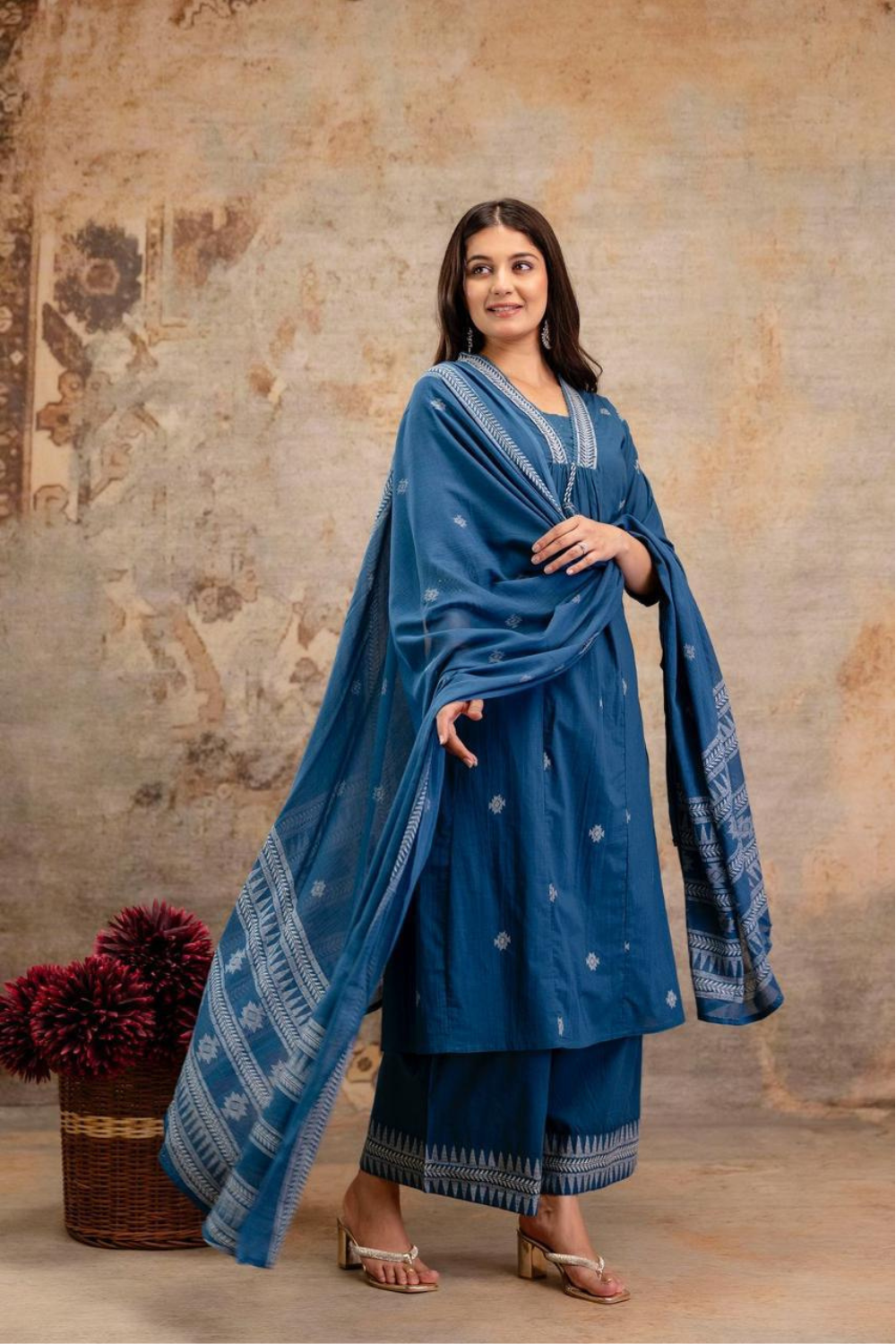
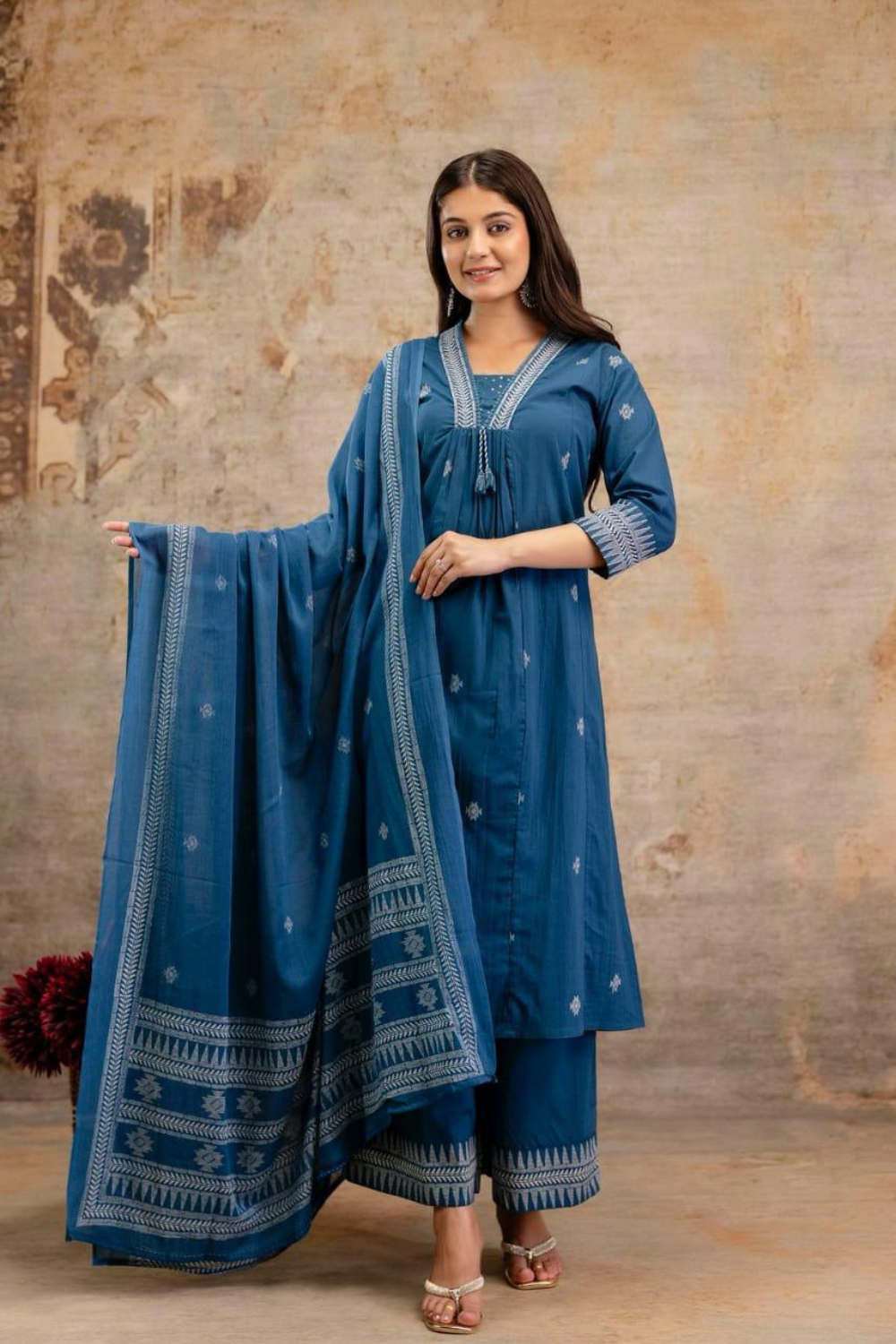
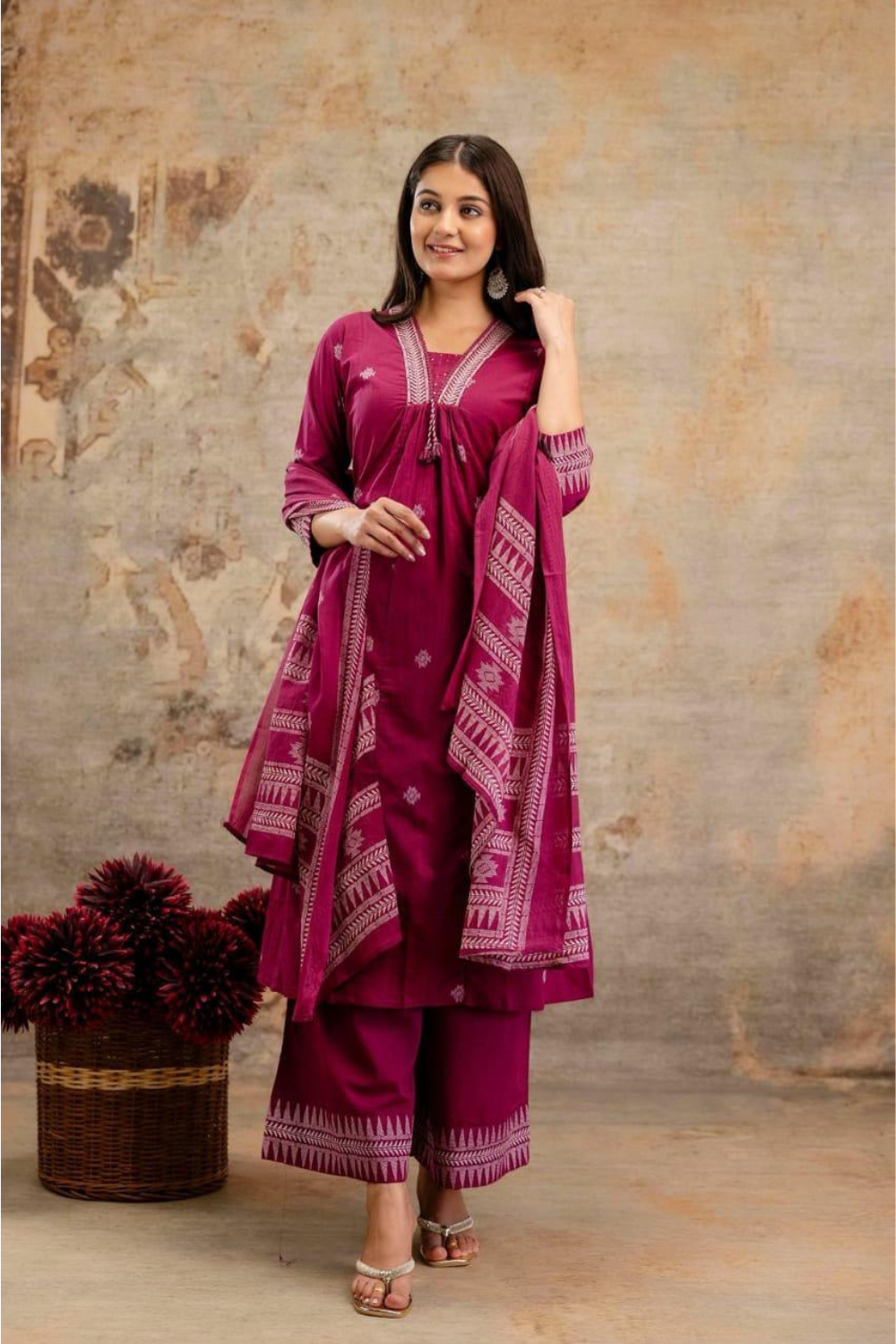
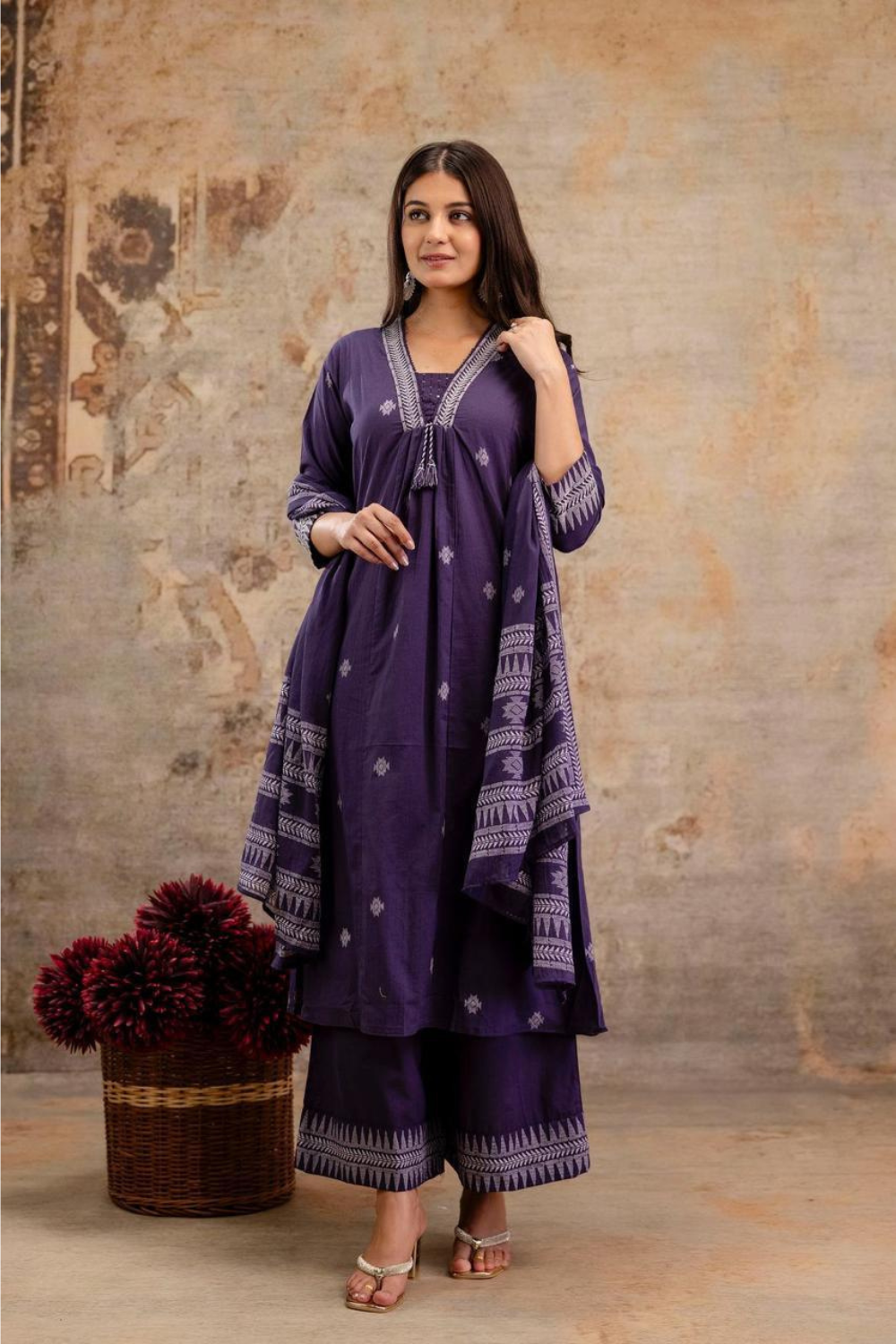
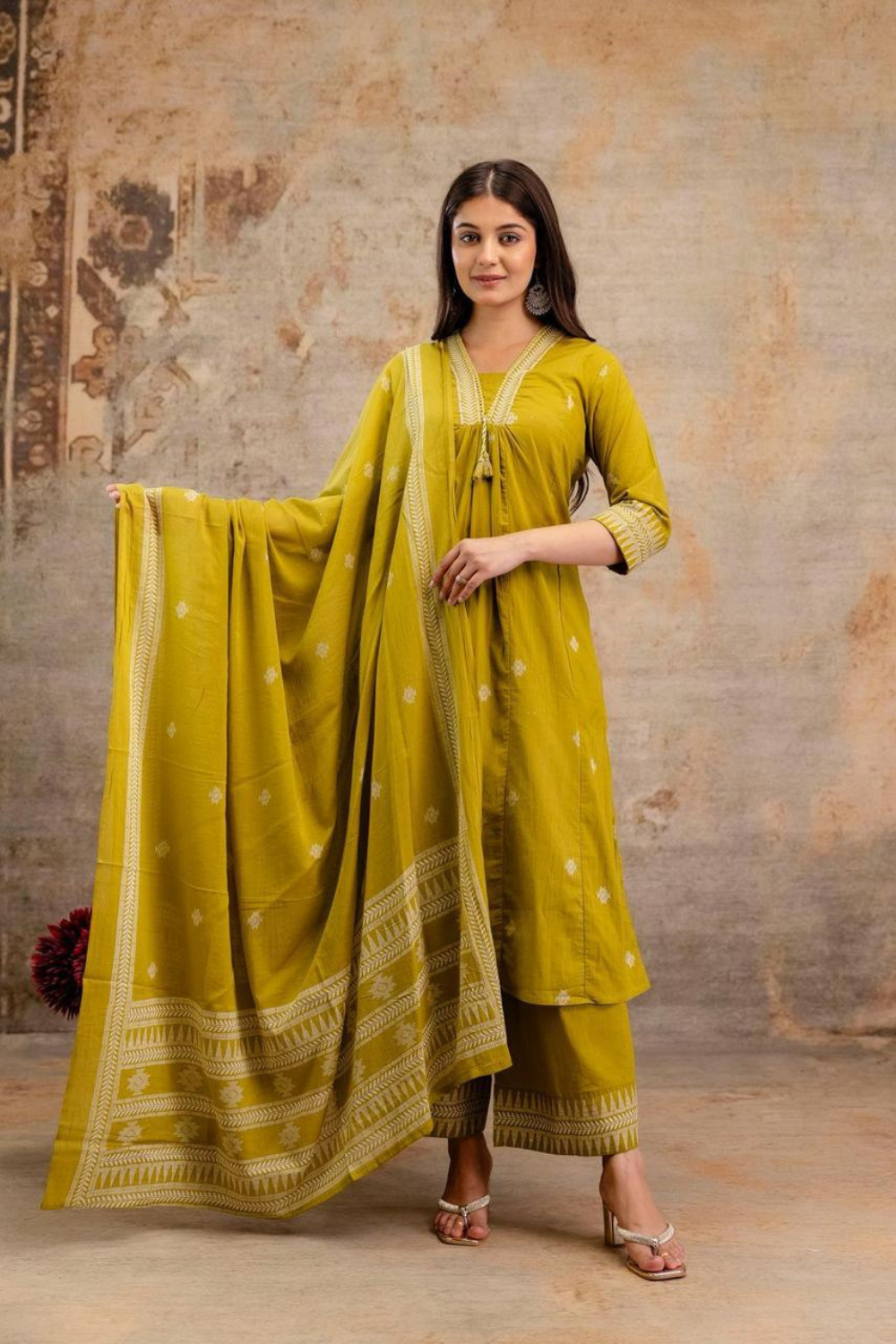
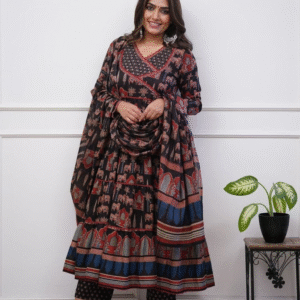
The outfit presents a picture of understated elegance and sophisticated ethnic chic. It’s a three-piece suit—a Kurta (tunic), Palazzo/Sharara (wide-leg trousers), and a Dupatta (long scarf)—all unified by the powerful monochromatic color scheme and the delicate contrasting white/light grey patterns. The look is one of quiet celebration, making the attire perfectly suited for semi-formal gatherings, cultural events, or festive daytime occasions.
Detailed Components and Craftsmanship
The Kurta (Anarkali )
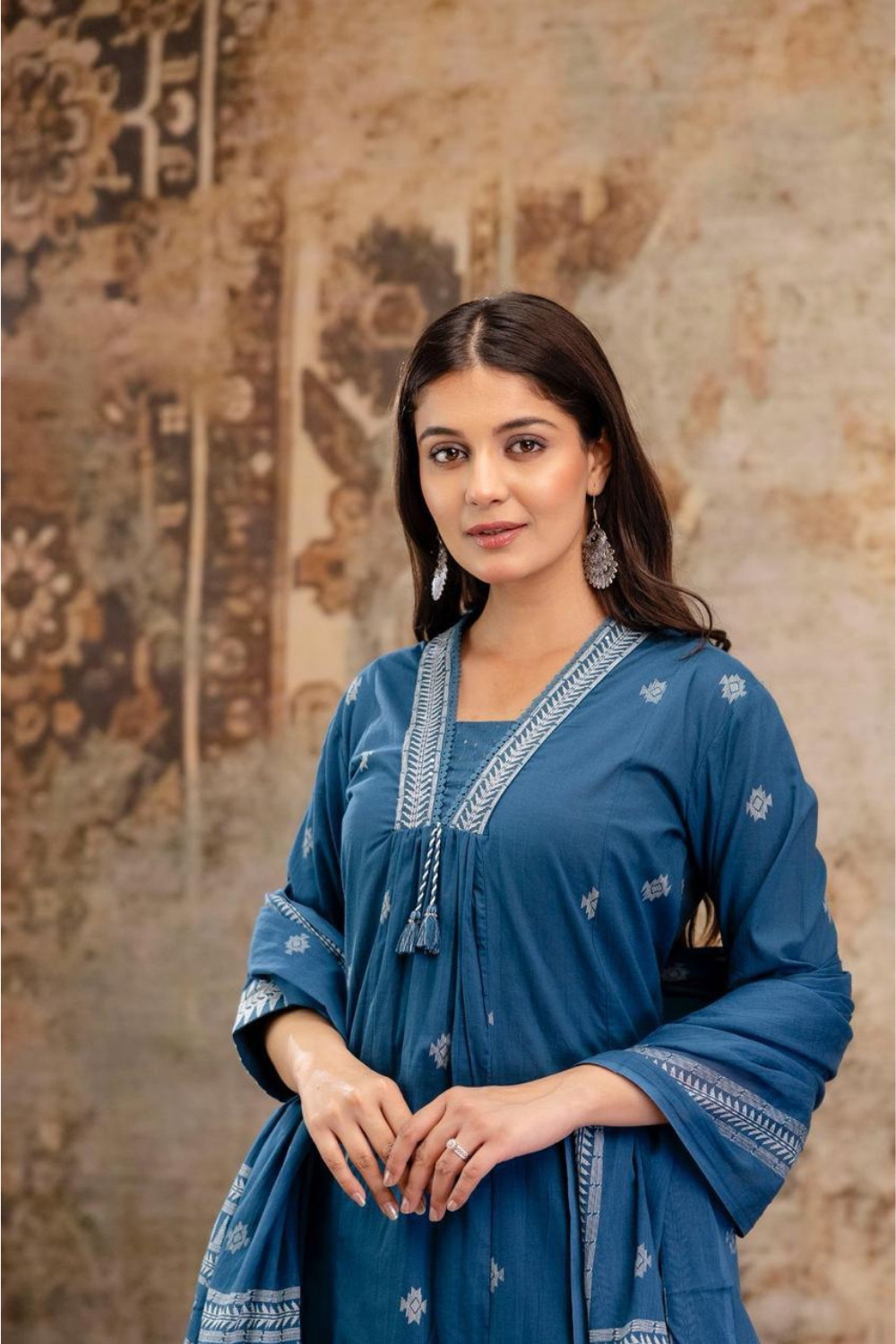
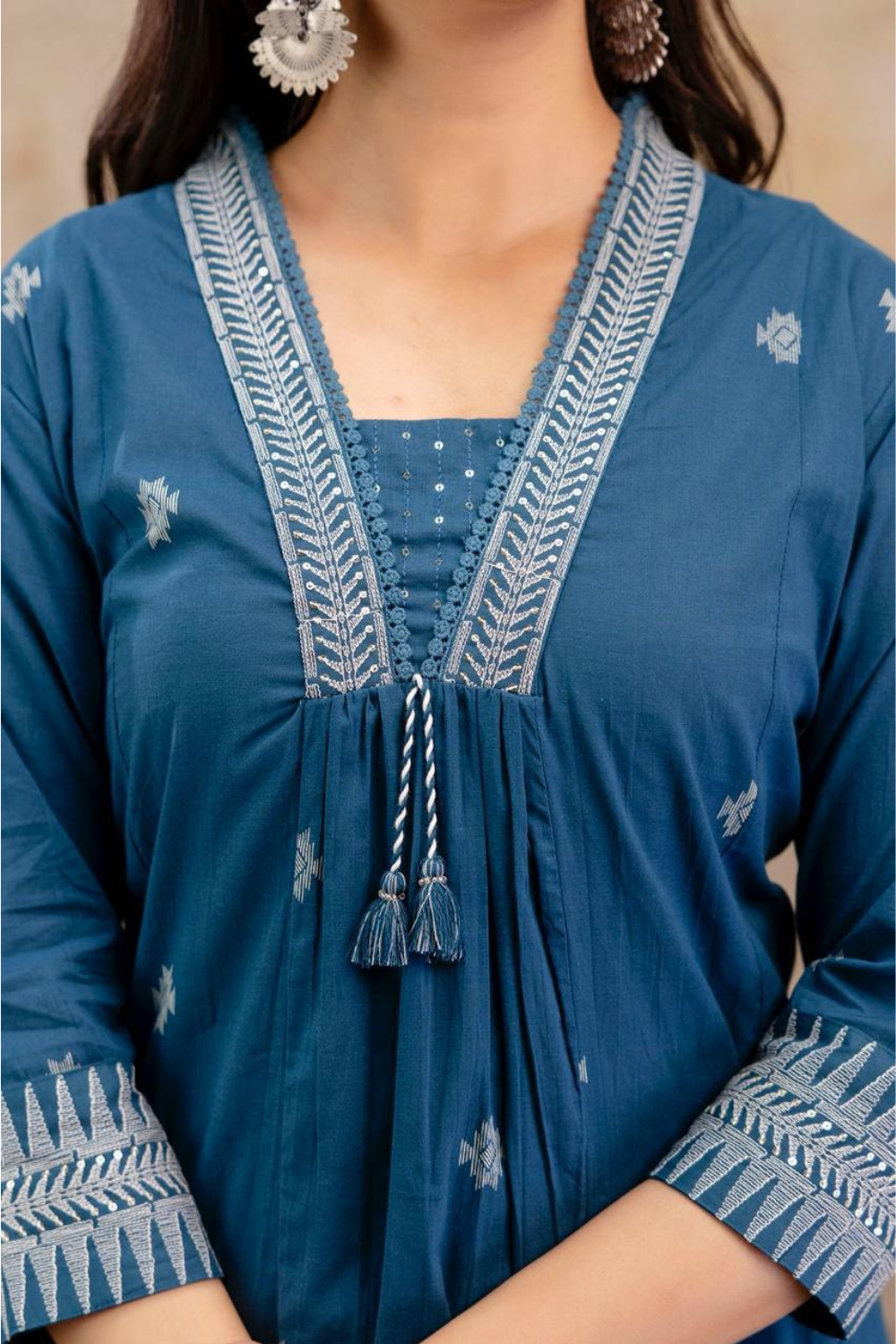
The Anarkali forms the foundational piece of the look, offering a sophisticated frame. It features a flattering A-line or straight silhouette that falls gracefully to a mid-calf length. The neck is a simple, elegant round or shallow V-neck, potentially detailed with a subtle piping or a short, stitched placket, maintaining a clean and uncluttered line.
The fabric of the Kurta is distinguished by its all-over, scattered design of small ‘bootis’ (motifs). These are sparsely placed, small, diamond or stylized floral shapes rendered in the light grey-white color. This restraint in patterning on the tunic contrasts effectively with the bolder patterns on the other pieces, ensuring the look remains balanced. The fabric appears to be a natural fiber, like soft cotton or a cotton-silk blend, evident from its gentle, non-stiff drape, which enhances the wearability and artisanal feel of the garment.
The Trousers (Palazzo/Sharara)
The lower garment is a key feature, adopting a modern wide-leg cut, resembling a Palazzo or Sharara. This style adds a contemporary flair, offering comfort and a flowing vertical line that complements the tunic.
The trousers’ visual impact is concentrated at the hemline. A deep, dense border pattern runs just above the ankle. This pattern is often a combination of geometric lines, chevrons, and repeating stylized elements, a characteristic feature found in traditional Indian block printing techniques, such as Ajrakh or Sanganeri prints. This heavy bordering at the base acts as a visual anchor, preventing the ensemble from feeling too airy or delicate. The width of the pants balances the length and volume of the Kurta, creating a harmonious and proportionate silhouette.
The Dupatta (Scarf)
The Dupatta is the most dramatic and texturally rich element of the outfit. It is generously sized and draped elegantly over both shoulders, cascading down the arms, which adds an element of traditional grandeur.
The patterning on the Dupatta is the most elaborate. It features broad, intricate borders that run along its length and width, framing the garment. These borders utilize complex, repeating motifs—often a dense sequence of diamonds, waves, or stylized architectural elements. The main field of the dupatta may contain lighter, scattered motifs that echo the bootis on the Kurta, subtly tying all three pieces together. The material, which appears soft and slightly sheer, drapes beautifully, adding texture and movement to the overall presentation. The craftsmanship here speaks to the precision of the pattern application, whether through weaving, sophisticated screen-printing, or traditional hand-block printing, highlighting the textile’s cultural depth.
Cultural Context and Modern Relevance
This ensemble acts as a powerful synthesis of age-old techniques and contemporary fashion. The use of geometric and folk motifs in white on indigo is a direct nod to classic Indian textile traditions, particularly Dabu or Ajrakh printing, where patterns are often created using mud resist and deep dyeing processes. By employing these traditional aesthetics on modern silhouettes—the wide palazzo and the streamlined kurta—the garment achieves a relevant, global appeal.
The rich blue color holds cultural significance, often symbolizing tranquility, depth, and heritage. The flow and modesty of the cut respect traditional Indian dressing norms while the wide-leg pants and minimal accessories reflect a confident, modern approach to fashion. The outfit thus serves a dual purpose: it honors the rich legacy of Indian handloom and printing while offering a comfortable, fashionable option for the discerning modern wearer who values sustainability, craftsmanship, and timeless style over transient trends. It represents a mature evolution of ethnic wear, prioritizing fabric integrity and cultural storytelling.
Reviews
There are no reviews yet.