
Tharvi Rusty Orange A Line Indian Kurta
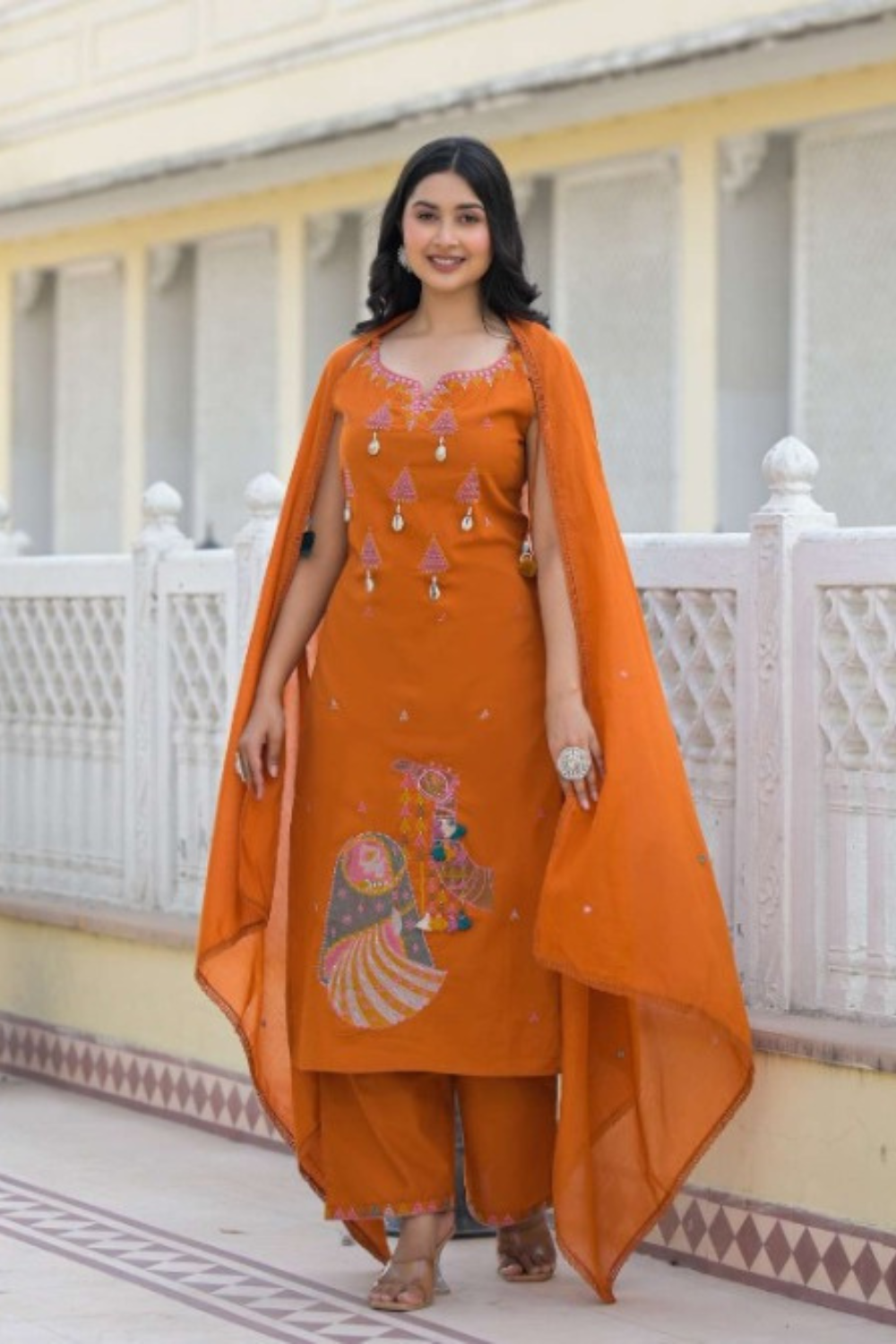
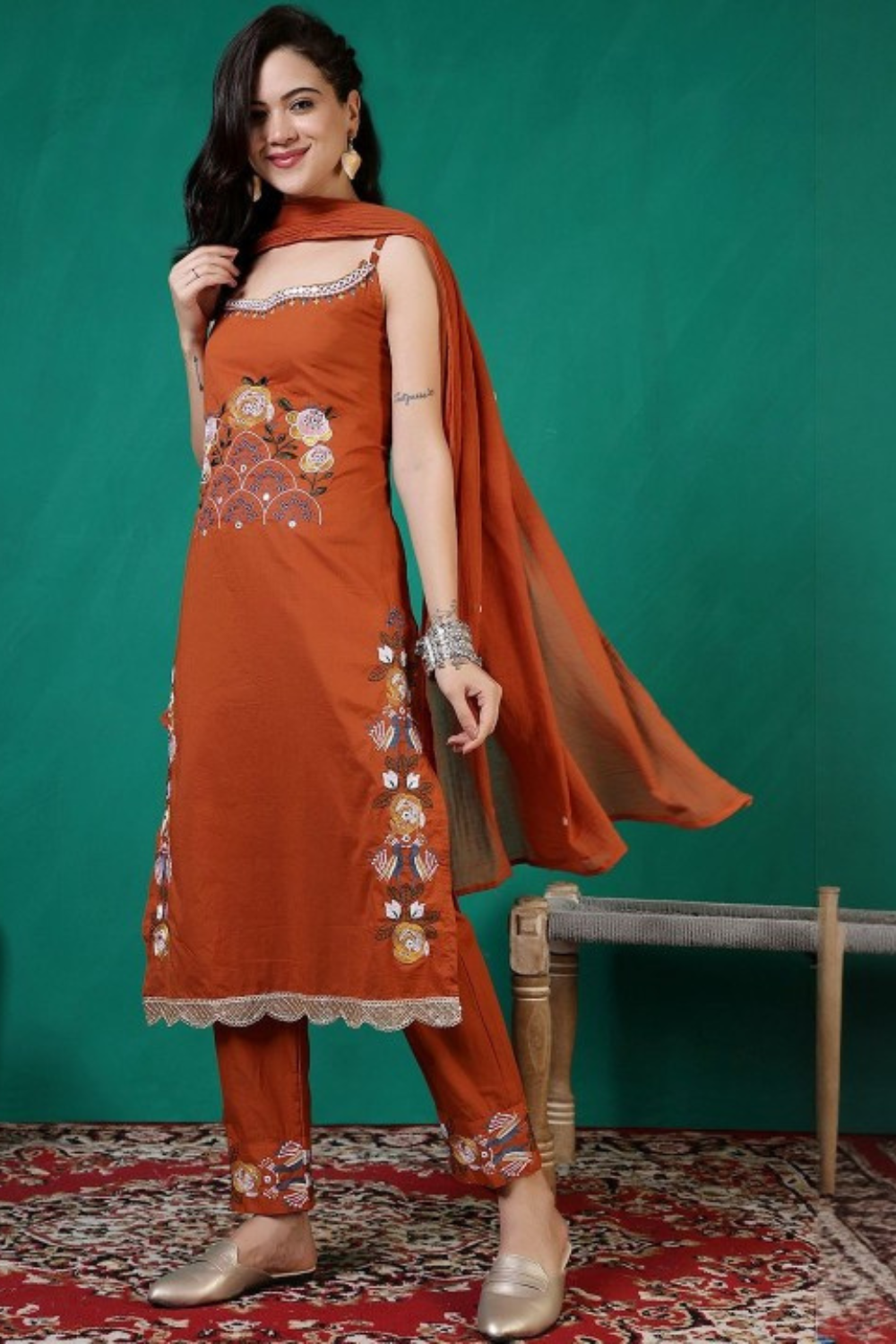
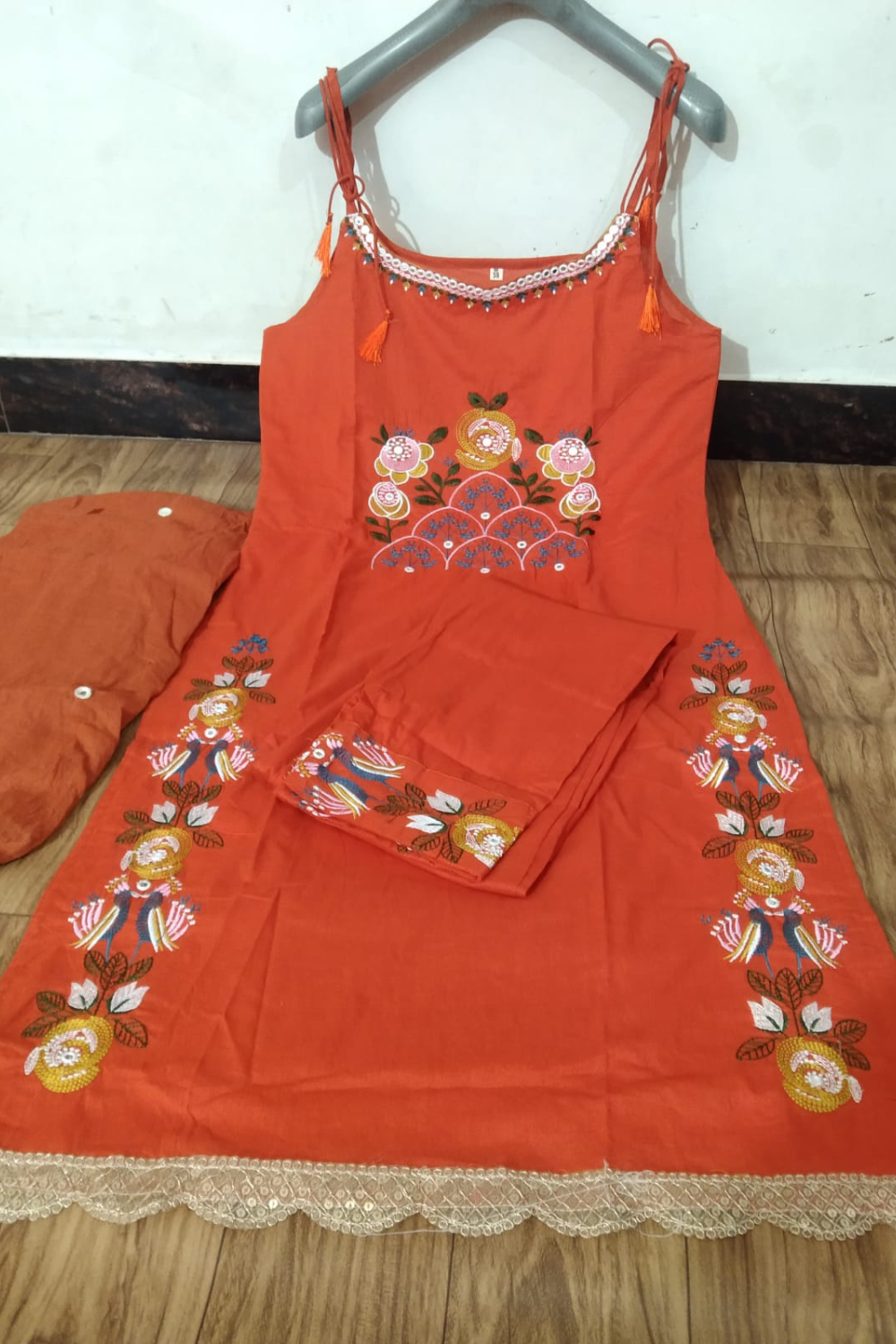
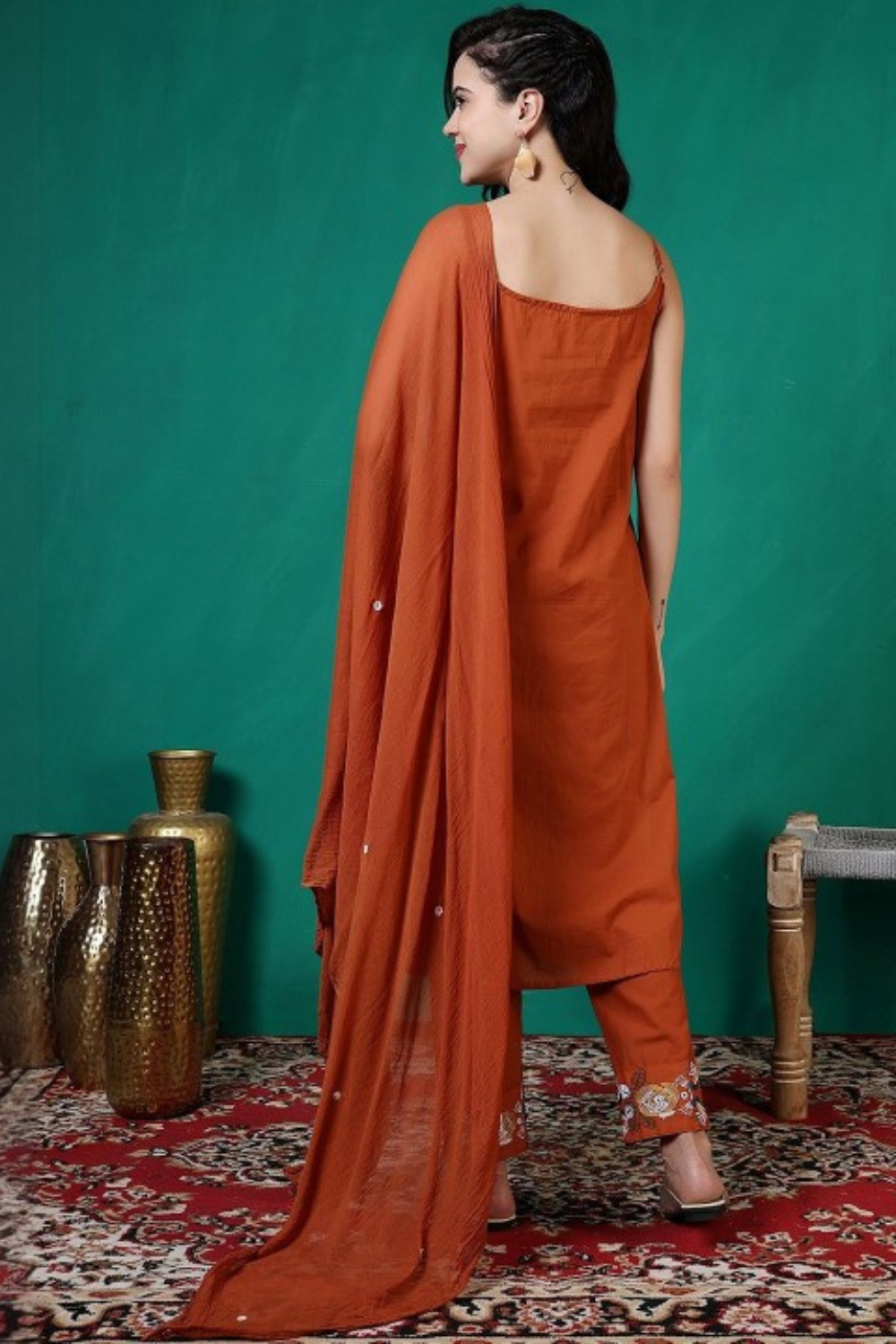
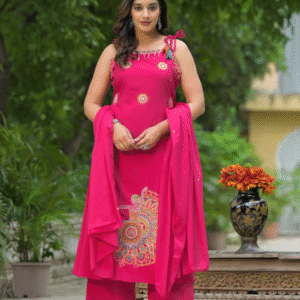
A stunning three-piece Indian ethnic wear ensemble. The outfit, in a striking shade of deep orange or rust, comprises a long kurta (tunic), matching salwar (trousers), and a coordinating dupatta (scarf/shawl). The ensemble is rich in traditional embroidery and appears to be made from a comfortable, opaque fabric, likely cotton, rayon, or a similar blend suitable for intricate embellishment. It radiates a festive yet elegant aura, perfect for cultural celebrations or special occasions.
The A Line Kurta (Tunic)
The central piece of the ensemble is the long, straight-cut kurta, which is heavily embellished with intricate embroidery.
Color and Fabric
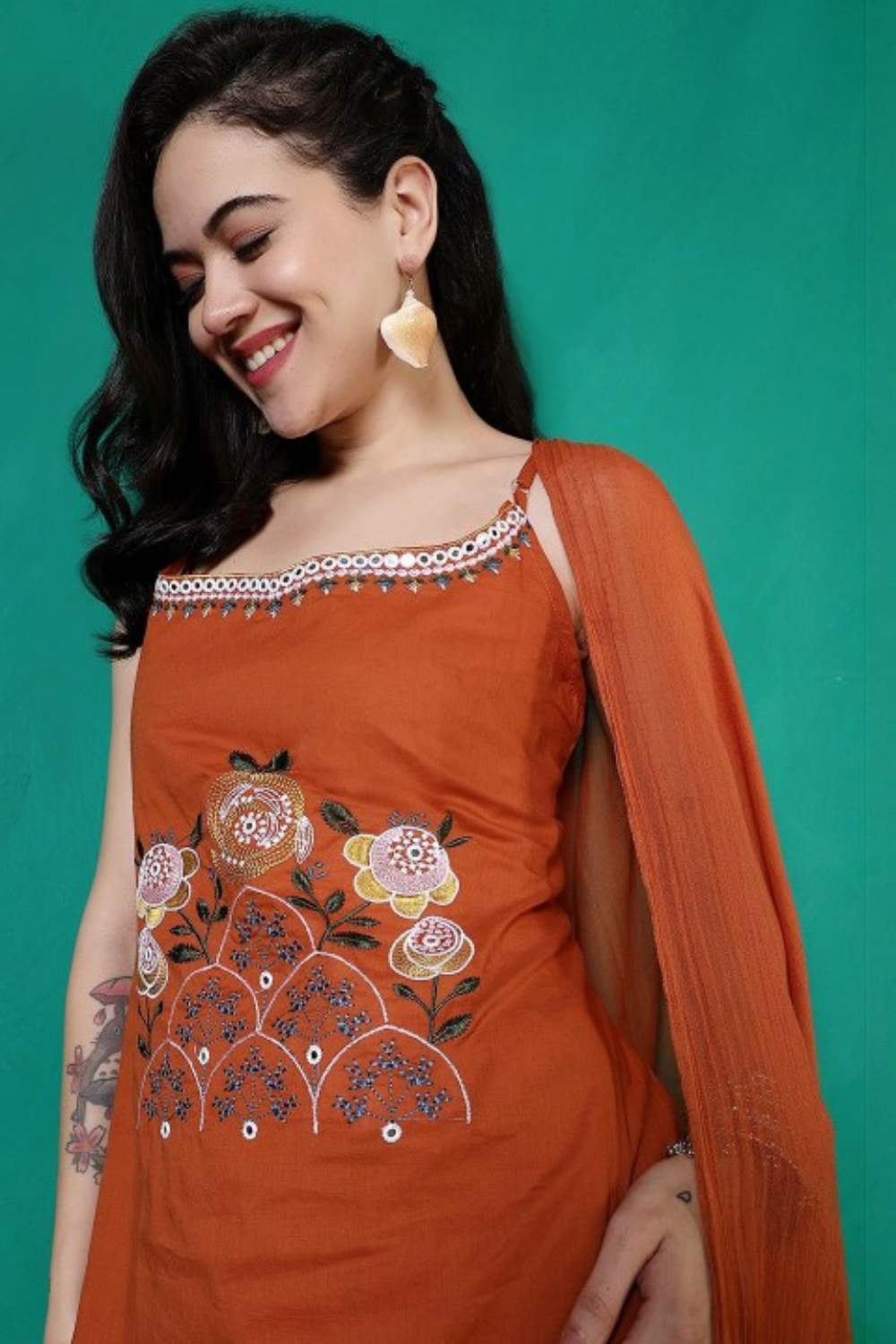
- Color: The kurta is in a rich, earthy tone of deep orange, rust, or terracotta. This warm and inviting color is traditional in Indian wear and provides a beautiful backdrop for the contrasting embroidery.
- Fabric: The fabric appears substantial yet comfortable, with a smooth, matte finish. It is likely a cotton or silk-blend, chosen for its ability to hold intricate embroidery and offer a comfortable drape.
Cut and Silhouette
- Length: The kurta is a long-line tunic, extending well below the knees, almost reaching the ankles. This length is classic for a traditional salwar-kameez set.
- Fit: It features a straight-cut silhouette, flowing down smoothly from the shoulders without being overly fitted, offering comfort and a graceful fall.
- Sleeves: The sleeves appear to be sleeveless or very short cap sleeves, leaving the arms bare, which allows for the dupatta to be draped elegantly over them.
Embroidery Detailing
The kurta is a canvas for elaborate, multi-colored embroidery, making it a statement piece.
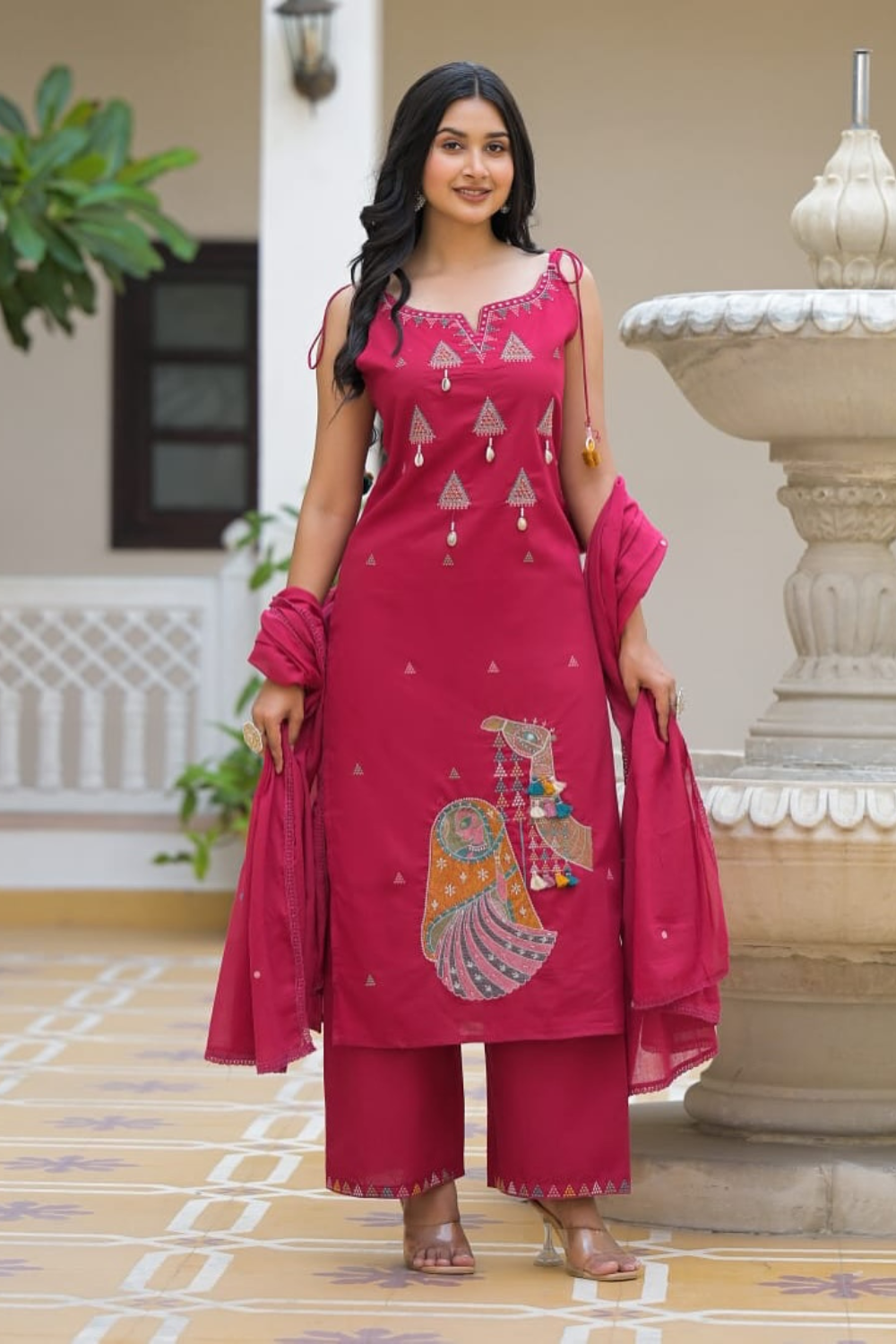
- Neckline: The round neckline is beautifully framed with dense, multi-colored embroidery. Predominant colors include pink, purple, and green, creating a striking contrast with the orange base. The stitching forms intricate patterns, possibly floral or geometric, around the collar.
- Bodice Embellishment: Below the neckline, the upper bodice features several distinct, tapered motifs or pendants, arranged vertically. These elements are intricately embroidered, possibly with mirror work, beadwork, or sequin detailing, catching the light and adding sparkle. Small tassels might be attached to the ends of some of these motifs, adding movement.
- Main Central Motif: The most striking embroidery is a large, central motif positioned on the lower front of the kurta. This appears to be a depiction of a traditional Indian figure or abstract animal (possibly a peacock or a stylized human form), rendered with immense detail and a rich palette.
- Color Palette of Motif: The motif utilizes a vibrant array of colors, including pink, blue, yellow, green, grey, and white, standing out vividly against the orange.
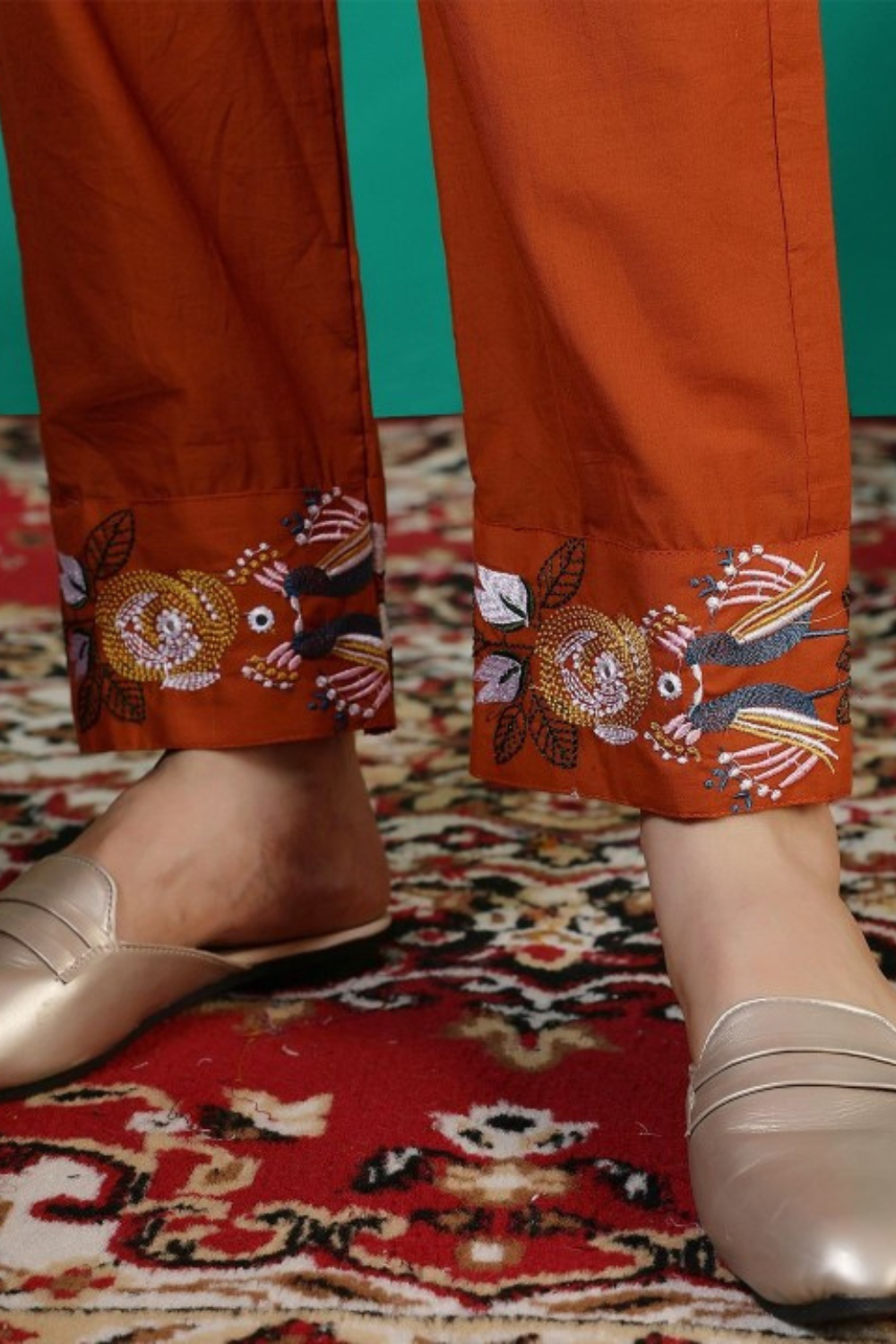
- Texture and Technique: The embroidery employs various stitches, possibly including chain stitch, satin stitch, and intricate thread work, to create texture and depth. Small mirrors or sequins might be incorporated to enhance its festive appeal.
- Hemline: The bottom hem of the kurta is kept relatively simple, allowing the central motif to be the primary focus.
The Salwar (Trousers)
The lower garment is a traditional salwar, designed for comfort and mobility.
- Color: The salwar perfectly matches the kurta in the same deep orange/rust shade, ensuring a cohesive look.
- Style: These are likely patiala salwars or a similar relaxed-fit trouser style, characterized by a loose, gathered fit around the hips and thighs, tapering slightly towards the ankle. The fabric gathers are subtly visible, creating a comfortable and traditional silhouette.
- Length: The length is full, ending at or just above the ankle.
- Simplicity: The salwar is unembellished, allowing the richly decorated kurta to take center stage.
The Dupatta (Scarf/Shawl)
The ensemble is completed with a graceful dupatta, adding flow and elegance.
- Color: The dupatta matches the kurta and salwar in the same deep orange/rust color.
- Fabric: It appears to be made from a lighter, sheerer fabric than the kurta, possibly chiffon, georgette, or a fine cotton voile, allowing it to drape elegantly.
- Drape: The model has draped the dupatta over both shoulders, with one end elegantly flowing down her front and the other across her back. The fabric falls in soft folds, enhancing the garment’s movement.
- Edges/Embellishment: While the body of the dupatta seems unadorned, the edges might feature a subtle border or minimal embellishment, or small tassels on the corners (one black tassel is visible on the left side, adding a playful touch). The sheer quality of the fabric lets the color shine through.
Overall Aesthetic and Interpretation
This ensemble beautifully embodies traditional Indian artistry with a contemporary appeal.
- Cultural Significance: The detailed of embroidery, particularly the central motif, speaks to rich Indian textile traditions and craftsmanship.
- Occasion: The outfit is clearly designed for festive occasions such as weddings, religious ceremonies, festivals (like Diwali or Navratri), or cultural events. Its vibrant color and intricate work make it a celebratory choice.
- Balance: The elaborate embroidery on the kurta is perfectly balanced by the simplicity of the matching salwar and dupatta, ensuring the outfit is harmonious and not overwhelming.
- Comfort and Style: The choice of fabric and relaxed cuts suggests it is designed for both comfort and elegance, allowing the wearer to enjoy festivities without restriction.
The overall impression is one of radiant beauty, cultural richness, and sophisticated traditional fashion, making the wearer stand out with grace and festive spirit.
Reviews
There are no reviews yet.